
When Behaviors Speak: Understanding Triggers
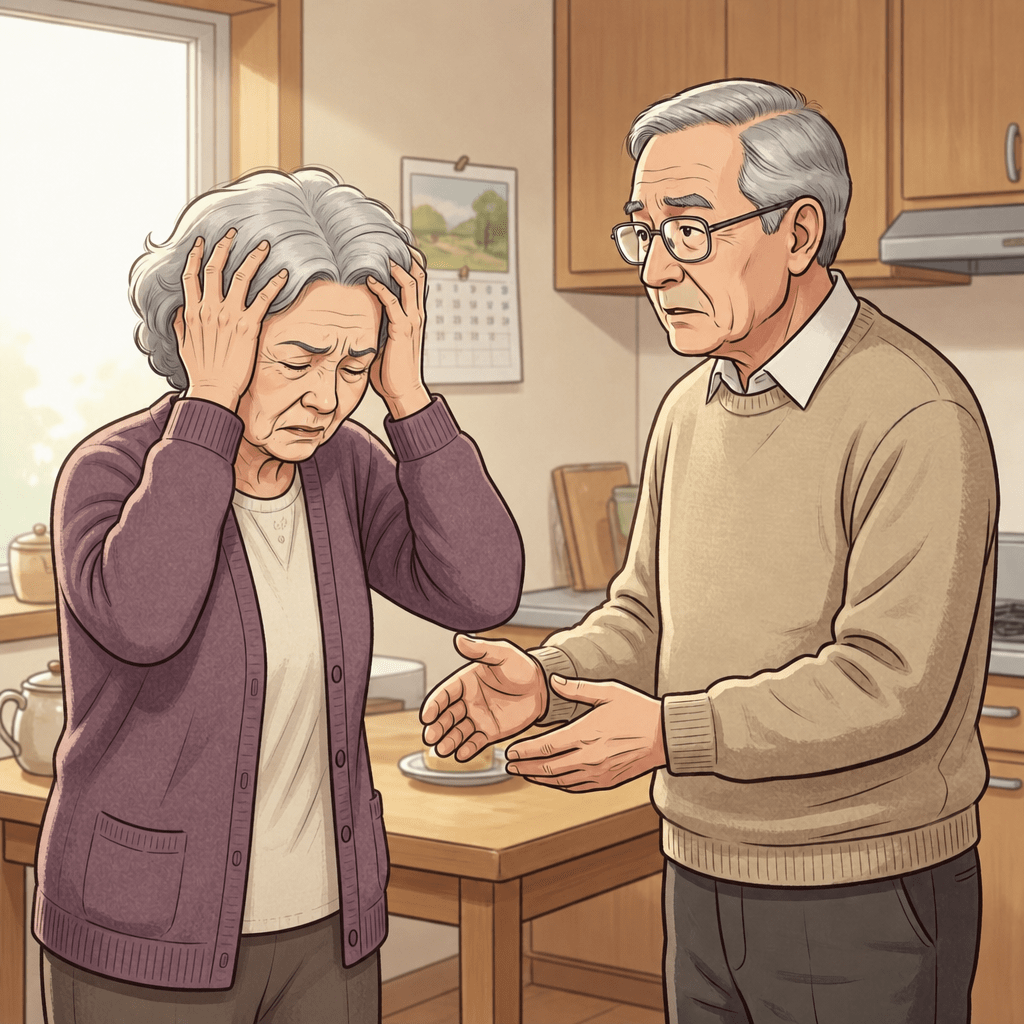
If you’ve ever had a loved one suddenly refuse to get dressed, pace the hallway at 4pm, or push you away when you’re only trying to help — you know how exhausting and confusing it can feel. It’s easy to label these moments as “difficult behavior.” But in dementia care, we look at it differently: behavior is communication. When words become harder to find, the brain finds other ways to say “something is wrong” or “I need something.” Our job isn’t to stop the behavior — it’s to understand what it’s telling us.
What’s Really Going On? Common Causes of Distress, Wandering, and Refusals
Distress, wandering, and refusals almost always have a root cause, even when it isn’t obvious at first glance. Some of the most common ones include:
Unmet physical needs: Pain, hunger, thirst, needing the bathroom, or even a UTI can show up as restlessness or irritability long before someone can tell you what’s wrong. Feeling too hot or too cold, or simply having extra energy that needs an outlet, can look the same way.
Unmet emotional needs: Just like physical needs, emotional needs don’t disappear as dementia progresses — they often become harder to put into words. Loneliness, boredom, feeling unheard, or missing a sense of purpose can surface as restlessness or pushback just as easily as a physical need can.
Who we are when we engage: It’s not just what we say — it’s how we show up. Our own mood, the speed we’re moving at, our tone of voice, or coming in without taking a moment to truly connect first can all become a trigger, even when our intentions are good.
Overstimulation or understimulation: A noisy, chaotic environment can overwhelm the brain. On the flip side, too little to do or engage with can lead to restlessness and wandering as the brain searches for purpose or stimulation.
Lack of purpose, or an old habit resurfacing: Wandering often isn’t random. Sometimes it’s the brain responding instinctively to a long-held routine — heading toward the door at the time they used to leave for work, or getting up at the time they used to check on the kids. Other times, it starts with a clear impulse to do something, but the original reason gets lost moments later. What follows is a kind of exploration — searching for the “why” — that can carry someone farther and farther from where they started. By the time you find them, they may have no idea where they are or why they went there, simply because the destination was never the point. The intention was, and it slipped away along the way.
Fear and misperception: As the brain changes, the world can become harder to interpret. A shadow might look like a person, a caregiver’s face might not be recognized in the moment, or a task might feel suddenly unfamiliar and unsafe.
Loss of control: Refusals are often less about the specific task (getting dressed, bathing, taking medication) and more about retaining some sense of autonomy when so much else feels out of their hands. In some cases, a person may simply not understand our intention or purpose in that moment — and resists as a natural response to that uncertainty.
Time of day: Many people experience increased confusion and distress in the late afternoon and evening — often called “sundowning” — as fatigue builds and light changes.
Not meeting them where they are: In the GEMS® state framework*, a person’s abilities can shift not just day to day but hour to hour. When we ask more of someone than their current GEMS® state can offer, frustration and pushback often follow. Just as important, we can fail to meet someone where they are emotionally — creating a personal disconnect that, over time, can erode trust.
The key is curiosity, not correction. Instead of asking “how do I stop this?” it helps to ask, “what is this behavior trying to tell me?”
Creating Calm: Strategies That Help
Once we understand that behaviors are messages, we can respond in ways that lower stress for everyone — including ourselves.
Approach with care, not just intention: Using a Positive Physical Approach™* — coming into view from the front, getting to eye level, offering a hand rather than reaching first — can prevent a startled or defensive reaction before it even starts.
Validate the feeling, not the fear: You don’t have to correct the facts to ease the emotion. “You seem worried — I’m right here with you” often calms more than “No, that’s not true.”
Lower the noise: Turning down the TV, reducing the number of people talking at once, or stepping into a quieter room can take a surprising amount of pressure off an overwhelmed brain.
Protect routine: Predictability is comforting. Keeping mealtimes, wake-ups, and care tasks consistent reduces the number of “surprises” a person has to process each day.
Meet them where they are: Adjust your pace, your words, and your expectations to match their GEMS® state in that moment — not the person they were yesterday, and not the person you wish they could be right now.
Offer choices, not commands: “Would you like the blue shirt or the green one?” restores a sense of control that a flat instruction can’t.
Ask for help: People generally like to feel useful, and that doesn’t change with dementia. Asking for a hand — holding something, “helping” fold a towel, walking alongside you — can turn resistance into cooperation by giving someone a sense of contributing, rather than being managed.
Reapproach instead of argue: If something isn’t working, it’s okay to step away. Give the moment a few minutes to settle, then come back with a fresh strategy rather than pushing through resistance.
Watch the body, not just the words: Clenched hands, pacing, or a furrowed brow often show distress before it’s spoken — these are your early signals to slow down and adjust.
The Takeaway
None of this means you’ll always know exactly what’s behind a behavior — sometimes it stays a mystery, and that’s okay. What matters most is the shift in mindset: from “How do I make this stop?” to “What does my person need right now?” That shift alone tends to lower stress for both of you, even before you’ve solved the puzzle.
If you’re navigating a particularly tricky pattern of behavior with someone you care for, you don’t have to figure it out alone. A free 30-minute consult is a great place to start untangling what’s going on — and finding a path forward together.
*Educational content provided by Positive Approach, LLC is used with permission and is based on the GEMS®, techniques, strategies, and overall approach to care created and developed by Teepa Snow.

